
Last Updated: November 14, 2026
Quick Summary
Contractor services for new home builds are the professional management and construction work that turns an empty lot into a finished house. Most homeowners need a licensed general contractor who holds the contract, pulls permits, and manages subcontractors through every phase from site prep to final walkthrough.
- Design-build puts design and construction under one contract and usually shortens the timeline.
- Verify the license is active, covers residential new construction, and name the qualifying party.
- Lock in long-lead items like garage doors, fireplaces, and windows before framing starts.
- Tie subcontract payments to completed milestones and collect lien waivers from every trade.
- Ask for a line-item estimate with a stated contingency, not one lump-sum number.
Table of Contents
- What Contractor Services for New Home Builds Actually Cover
- What Kind of Contractor Do I Need to Build a House?
- New Home Construction Subcontractors and Where Your Finish Trades Fit
- Your New Home Build Contractor Checklist
- Line Up Your Garage Door and Fireplace Partner Before Framing Starts
- Frequently Asked Questions
What Contractor Services for New Home Builds Actually Cover
Contractor services for new home builds are the professional management and construction work that turns an empty lot into a finished house. Performance Building Products, Inc. sells, installs, and services garage doors, automatic openers, and gas and electric fireplaces for contractors, builders, and homeowners. Below, we’ll show what each phase covers, how to pick the right contractor, and where new home builds most often go sideways.
From Site Prep to Final Walkthrough
A new home build moves through a predictable sequence, and every stage depends on the one before it. Site preparation clears and grades the lot, then foundation work pours footings and slab or basement walls. Framing follows, then roofing dries the structure in. Mechanical, electrical, and plumbing rough-ins run through the walls before insulation and drywall close them up. Finish trades handle siding, masonry, trim, cabinets, and flooring, and the final walkthrough produces your punch list.
What most guides miss is the scheduling pressure behind that sequence. A missed inspection can push framing back a week, and every trade behind it shifts too.
Design-Build vs. Traditional Contracting
Design-build puts architectural design and construction under one contract. Traditional contracting splits them: you hire a designer, bid the drawings out, then hire a builder to execute.
Design-build usually shortens the timeline because design and budget decisions happen together. Traditional contracting gives you more control over each piece and often more competitive bids, but coordination is on you.
What Kind of Contractor Do I Need to Build a House?
Most homeowners need a licensed general contractor who holds the contract, pulls permits, and manages subcontractors. A custom home builder works the same way but specializes in one-off designs rather than plan-book houses.
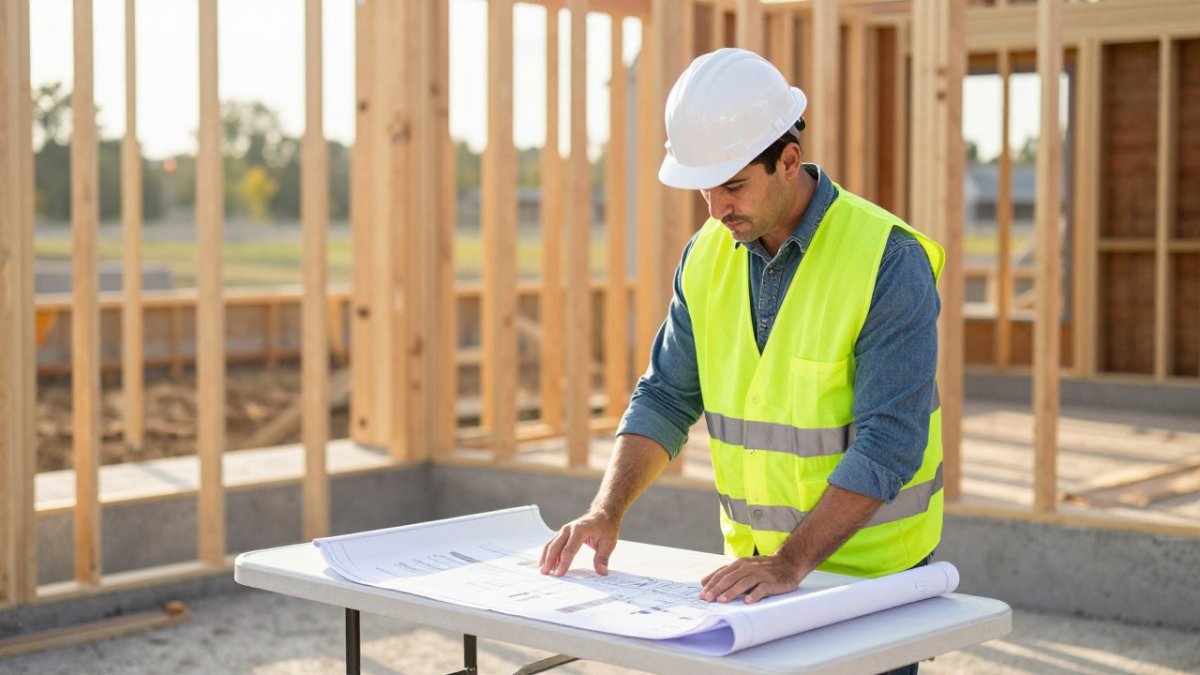
Here’s the practical split:
- General contractor: owns the schedule, permits, budget, and trade coordination
- Custom home builder: a general contractor whose business is built around unique designs
- Construction manager: hired as a consultant, often with the owner holding trade contracts directly
- Design-build firm: one entity for design and construction
A common mistake is hiring a builder who is really a remodeler with a nice website. Ask how many ground-up builds they completed in the last two years, and ask for the addresses.
License, Insurance, and Scope Verification
Licensing for residential construction is handled at the state and local level, and requirements vary enough that you cannot assume a builder licensed in one jurisdiction is cleared to work in yours.
Insurance is the second filter. Ask for a certificate of insurance showing general liability and workers’ compensation coverage, and call the agent listed to confirm the policy is current and the limits are what you expect.
Scope verification is where most homeowners get surprised. The contract should state in writing who is responsible for site surveys, engineering, permits, utility connections, temporary power, dumpsters, and final grading. Items left unassigned become change orders later.
How the Delivery Method Affects Cost and Control
The delivery method you choose changes both your cost exposure and your day-to-day control. Design-build typically prices the project as a single contract, which simplifies financing and shortens the schedule.
Traditional design-bid-build gives you competitive bids and more control over each selection, but it adds time and puts coordination on you or your designer.
Watch out: a builder who quotes a single lump-sum price with no line-item backup and no stated contingency is not giving you a comparable bid, and the missing detail usually reappears as change orders once framing starts.
New Home Construction Subcontractors and Where Your Finish Trades Fit
New home construction subcontractors do the actual trade work under the general contractor’s schedule. The core group includes excavation, concrete, framing, roofing, electrical, plumbing, HVAC, drywall, and painting crews. Finish trades come later: cabinetry, countertops, flooring, tile, and the exterior products that make the house look finished from the street.
How the General Contractor Scopes and Sequences Trades
A general contractor does not perform most of the work; the job is won or lost in how trades are scoped, sequenced, and paid.
The sequence is unforgiving. Rough framing must pass inspection before electrical, plumbing, and HVAC rough-ins can be covered. Those rough-ins must pass their own inspections before insulation and drywall. Drywall must be finished and primed before trim, cabinets, and flooring.
Payment follows the same logic. Most subcontracts tie draws to completed milestones rather than calendar dates, and the general contractor collects lien waivers from each trade before releasing the next payment.
Finish Trades and Long-Lead Selections
Finish trades are where budgets drift and schedules slip, because the selections that drive them are often made too late.
The practical rule is to lock in long-lead items before framing starts. Garage door sizes determine the rough opening dimensions and header sizing, and the opener electrical rough-in has to be placed before drywall. Fireplace selection drives framing, venting, and gas or electrical rough-in decisions.
Watch out: a builder who lets you defer garage door, fireplace, window, and cabinet selections until after drywall is either absorbing the rework cost into your contract or planning to pass it to you as a change order.
Your New Home Build Contractor Checklist
A new home build contractor checklist is the fastest way to separate a professional operation from a risky one. Use these criteria before you sign anything:
- License and registration current and verifiable with the state
- Insurance certificates for general liability and workers’ compensation
- Three recent ground-up builds with addresses you can drive past
- Written scope of work listing every trade and every allowance
- Payment schedule tied to completed milestones, never large upfront draws
- Lien waiver process explained in writing
- Change order procedure documented before work starts
- Written construction timeline with inspection dates
- Warranty terms for workmanship, in writing
- References from clients whose homes are two or more years old
That last item matters more than the rest. A reference from a house that closed last month tells you nothing about how the builder handles warranty calls.
Contract Red Flags and Cost Transparency
Cost transparency starts with a budget you can actually read. Ask for a line-item estimate covering site work, foundation, framing, trades, finishes, permits, and a stated contingency. If the estimate is one lump number, you cannot tell where your money goes or whether an allowance is realistic.
Watch out for these red flags: a contract with no completion date, allowances set unrealistically low to win the bid, requests for large cash draws before work begins, no lien waiver language, and a builder who won’t put change order pricing in writing. Any one of these is worth a second conversation.
Line Up Your Garage Door and Fireplace Partner Before Framing Starts
Garage door sizes drive the framing openings, opener placement drives the electrical rough-in, and fireplace selection drives framing, venting, and gas or electrical rough-in decisions. Choosing them after drywall means paying someone to redo work.
That’s where we come in. Performance Building Products, Inc. sells, installs, and services garage doors, automatic openers, and gas and electric fireplaces for contractors, builders, and homeowners, mostly on residential projects with some commercial work.
For current pricing and a quote, visit the Performance Building Products, Inc. website; pricing depends on quantity, dates, and delivery.
The challenge with contractor services for new home builds is that the schedule punishes late decisions.
Frequently Asked Questions
What services does a general contractor provide for new home builds?
A general contractor runs the whole project: permitting and zoning paperwork, site preparation, scheduling subcontractors, ordering materials, supervising the site, and managing the budget and timeline through final walkthrough. They also hold the contract with you and carry liability for the work. On new home builds, the general contractor coordinates trades like foundation, framing, roofing, electrical, plumbing and finish installers so the sequence holds together.
What are red flags when hiring a contractor for a new home build?
Watch for large upfront deposits before any work starts, a contract with no line-item scope or payment schedule, no license number on the paperwork, and pressure to skip permits. Ask for a certificate of insurance for general liability and workers’ compensation and verify it with the insurer. A vague contract is a real risk, not a formality. Be cautious with any bid that is far below the others with no written explanation.
When should you hire subcontractors for a new home build?
Specialty trades get scheduled during pre-construction, not after framing. Garage door installation for new construction needs rough opening dimensions and header details settled before drywall, and fireplaces need venting and gas or electrical rough-in planned at the same stage. Give each subcontractor the project schedule and confirm lead times in writing. If you are acting as your own general contractor, you take on scheduling risk: one late trade delays every trade behind it, and you own that cost.
How do you compare bids from contractors for a new home build?
Compare scope, not totals. Put every bid against the same line items: site prep, foundation, framing, roofing, siding, windows, garage doors, fireplaces, mechanicals and finishes. Ask whether permits, cleanup and a contingency line are included. A low bid often excludes items another bidder priced in. Request a payment schedule tied to milestones, a completion date with a defined remedy for delays, and a written allowance list for anything not yet selected. Pricing varies by scope and selections, so get itemized quotes rather than a single lump sum.

Recent Comments