
Last Updated: November 7, 2026
Quick Summary
To fix a garage door spring safely, first confirm whether it is a torsion or extension spring and whether you should DIY at all. Garage door springs store enough force to cause serious injury, so a trained technician should handle most spring repairs, especially when the door is off track or a spring is broken.
- Industry safety guidance says spring systems should be repaired only by trained personnel.
- Identify your spring type first: torsion springs mount above the door, extension springs run along the tracks.
- Match replacement springs by wire size, inside diameter, length, wind direction, and cycle rating.
- Never use the opener with a broken spring, and keep people and pets clear of the door.
- Always wind springs with proper winding bars, standing to the side and never in line with the spring.
Table of Contents
- Stop Before You Start: When a Garage Door Spring Repair Is Not a DIY Job
- Identify Your Spring System and Choose a Compatible Replacement
- Garage Door Spring Repair Kit: Tools, Materials and Safety Gear
- How to Install Garage Door Springs and Cables Safely
- How to Wind a Double Spring Garage Door and What Replacement Costs
- Test the Door, Then Book Your Professional Spring Service
- Frequently Asked Questions
Garage door springs store a huge amount of force, and a broken spring can cause serious injuries. A routine-looking repair can turn dangerous quickly. Torsion springs in a typical residential door hold tension that a homeowner may not expect, and a dislodged spring can strike with enough force to cause harm. This guide walks through how to fix a garage door spring safely, and it starts with the question most people skip: should you be doing this yourself at all?
Stop Before You Start: When a Garage Door Spring Repair Is Not a DIY Job
Most spring repairs belong with a trained technician, not a homeowner with a socket set.
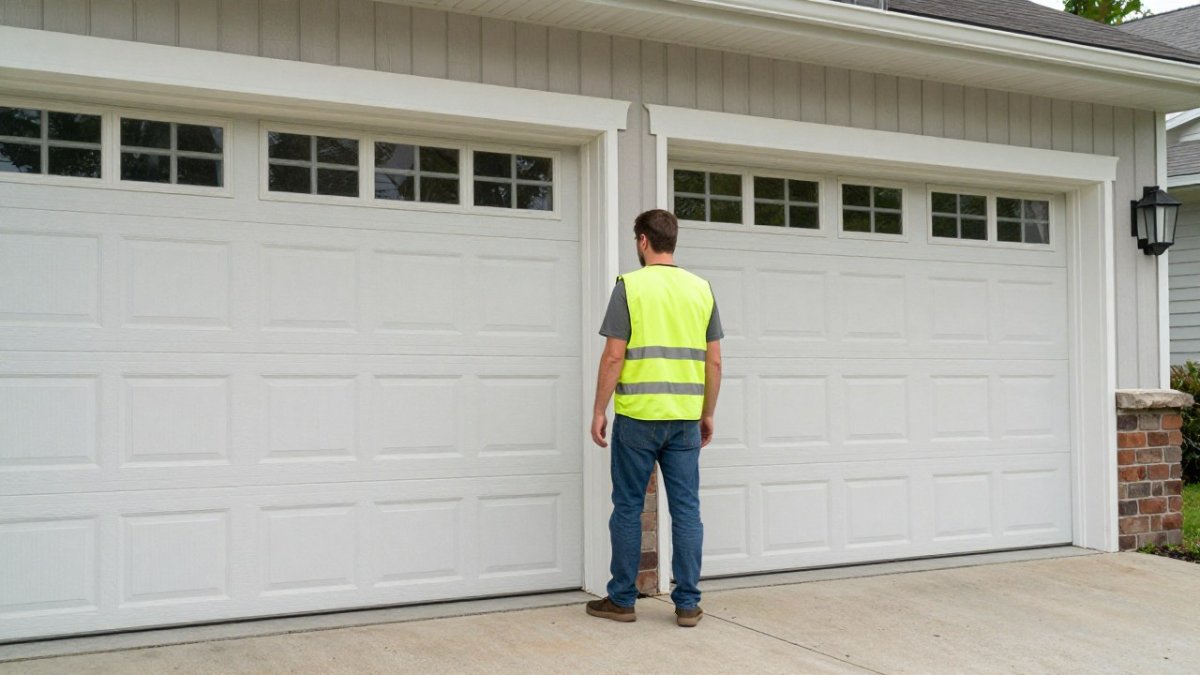
Use this stop-work checklist before you touch anything.
Stop-work checklist
- The door is off its tracks, hanging crooked, or will not close evenly.
- You see a gap in a torsion spring, a spring that has visibly separated, or a broken extension spring hanging from its track.
- You do not know whether your door uses torsion or extension springs.
What to do immediately after a spring breaks
- Do not use the opener. A door with a broken spring can come down hard or bind in the tracks.
- Do not touch the spring, cables, or winding cones. A partially wound spring can still release.
- Keep people and pets out of the doorway and away from the tracks.
- If the door is open and a vehicle is trapped, leave the door in place and call a professional rather than forcing it. Do not try to lift the door by hand unless a trained person directs you.
- Secure the area and arrange service. Contact a repair provider about available service times.
When the door is stuck or a vehicle is trapped
A stuck door is an urgent situation, but it is not a reason to force the spring.
Industry safety guidance says spring systems should be repaired only by trained personnel.
Identify Your Spring System and Choose a Compatible Replacement
Before you buy anything, figure out what you have. Look above the door. Torsion springs sit on a steel shaft across the top of the opening.
Identify the spring type
- Torsion: a horizontal spring (or two) mounted on a shaft above the door, with cables running down to drums at each end.
- Extension: springs that stretch along the side tracks, often with a safety cable running through the center of each spring.
Measure the spring
Use a tape measure and calipers if you have them. Record these values before ordering:
- Wire size (gauge): the diameter of the spring wire. This is the most important spec and the easiest to get wrong.
- Inside diameter: the open space inside the coil.
- Length: the length of the coil, not including the winding cones.
Match the replacement
- Match wire size, inside diameter, length, wind direction, and cycle rating to the old spring.
- Note the number of springs. Many residential doors use two springs side by side, and both should be replaced at the same time if they are the same age.
- Choose a cycle rating that fits how often the door is used. A standard spring is rated for a set number of open-and-close cycles, and a higher-cycle spring costs more but lasts longer.
A replacement that does not match the door’s weight can leave the door unbalanced, wear out fast, or fail early. If the old spring’s markings are worn off, measure carefully or have a professional identify it.
Torsion Springs Versus Extension Springs
Torsion springs mount above the door and wind up to lift it. They tend to last longer and are generally considered the safer system for most homes.
Know which type you have before you order parts. The repair steps differ, and so does the danger. Extension springs can fail and snap back along the track, which is also a serious hazard.
Use these measurements and checks to confirm the right spring before you order.
| Spec or check | What to record | Why it matters |
|---|---|---|
| Wire size (gauge) | Diameter of the spring wire | Most important spec and easiest to get wrong |
| Inside diameter | Open space inside the coil | Must match the old spring |
| Length | Coil length, excluding winding cones | Must match the old spring |
| Wind direction | Left- or right-hand wound | Determines which spring fits |
| Color code | Paint marks on coil ends | Shows wire size and cycle rating |
| Number of springs | Usually one or two side by side | Replace both if they are the same age |
| Cycle rating | Open-and-close cycles the spring is rated for | Should fit how often the door is used |
Garage Door Spring Repair Kit: Tools, Materials and Safety Gear
If you have decided to keep the work in-house and the door is in a safe, standard setup, gather the right gear first. Working without it is how people get hurt.
Tools:
- Winding bars (get the correct size for your spring)
- Locking pliers or vise grips
- Socket wrench set
- A sturdy stepladder
Materials:
- Replacement spring matched to your door
- Lubricant suitable for springs
- Replacement cables if they are worn
Safety gear:
- Safety glasses
- Work gloves
- A helper who can stay clear of the work zone
Do not use a standard screwdriver or a plain wrench in place of proper winding bars. Those tools can slip and release tension suddenly.
How to Install Garage Door Springs and Cables Safely
Only attempt this part if the door is in a safe, standard setup and you have confirmed your spring system. Otherwise, stop and call a professional.
- Secure the door. Close it fully. Pull the emergency release, then clamp the door to its track so it cannot move.
- Disconnect the opener. Unplug it or pull the release cord so the door operates manually.
- Release the tension. Work slowly, and use locking pliers to hold the winding cone while you loosen the set screws.
- Remove the damaged spring. Take off the old spring and inspect the cables and drums while everything is slack.
- Install the cables and new spring. Thread the lift cables onto the drums, then fit the replacement spring onto the shaft.
- Wind the spring carefully. Insert the winding bars and turn in small, even increments. Keep your body to the side of the bars at all times, and never stand in line with the spring.
- Test the door. Lift it by hand, confirm it stays balanced, and reconnect the opener only after the door moves smoothly.
Watch out: Never stand directly under or in line with a spring while winding it. A slipping winding bar can release the spring with force.
How to Wind a Double Spring Garage Door and What Replacement Costs
Double-spring doors need both springs wound evenly. Wind each side the same number of turns, and count every turn as you go.
On cost, pricing depends on the spring type, door size, labor, and service scope. Pricing depends on spring type, door size, labor, and service scope, so contact Performance Building Products, Inc. or check our website for a current quote.
Test the Door, Then Book Your Professional Spring Service
After any repair, test the door several times. Check that it opens and closes evenly, stops at the right points, and does not drift or bounce.
Even when a repair goes well, a professional inspection can catch problems you may miss. Performance Building Products, Inc. sells, installs, and services garage doors, automatic openers, and fireplaces for homeowners and contractors.
Get started with Performance Building Products, Inc. and book your spring service today.
Frequently Asked Questions
Can you fix a garage door spring on your own?
Replacing a torsion spring is high-risk work. Those springs store a large amount of energy, and a spring that releases while you are winding or removing it can cause serious injury, including eye injuries. Homeowners can safely check cables, tracks and the opener, but spring replacement is best left to a trained technician. If you choose to attempt it, disconnect the opener, secure the door, use winding bars rather than your hands, and stop if anything looks unfamiliar. For most homeowners, a professional repair is the safer and more reliable choice.
Can I manually lift my garage door if the spring is broken?
A door with a broken spring is much heavier to lift by hand and can drop suddenly, so do not try to lift it with the opener engaged or without securing it first. Disconnect the opener using the emergency release cord, then lower the door fully. Avoid lifting it manually if the cables are slack or the door is off track. A broken spring means the door is no longer balanced, so keep people and vehicles clear and contact a repair service before using the door again.
How can I tell if my garage door spring is broken?
Common signs include a door that will not open, one side sitting lower than the other, a visible gap in a torsion spring coil, a loud bang from the garage, or a door that feels much heavier when opened by hand. Look at the springs above the door for stretched or broken coils. If the door opens only partway or the opener strains, stop using it. A visible break or any uncertainty is a reason to stop and call a professional rather than investigating further.
Should I use the garage door opener if a spring is broken?
No. Running the opener with a broken spring strains the motor, gears and cables, and it can cause the door to drop unevenly and damage the track or other components. Disconnect the opener and secure the door until a technician can replace the spring. Using the opener on an unbalanced door also increases the chance of injury if the door falls.

Recent Comments