
Last Updated: November 2, 2026
Quick Summary
The best garage door brands for residential homes are separated by published steel gauge, insulation R-value at a stated thickness, spring cycle ratings, and warranty terms that include labor. Compare garage door brands on these written specifications rather than curb appeal, and question any brand that will not publish them.
- Ask every dealer for steel gauge, R-value, cycle rating, and warranty terms in writing.
- A brand that will not publish steel gauge, R-value, or spring cycle rating is worth questioning.
- A longer warranty that excludes labor can cost more than a shorter one that includes it.
- Coastal and storm-prone areas need doors tested to local wind-load requirements.
- A poorly hung door wears out springs early and strains the opener.
Table of Contents
- What Separates the Best Garage Door Manufacturers
- Garage Door Brands to Avoid and Warning Signs
- Garage Door Opener Brands That Pair Well
- What Best Garage Doors Consumer Reports Testing Reveals
- Matching Garage Door Brands to Your Home and Budget
- Scheduling a Residential Garage Door Installation
- Frequently Asked Questions
What Separates the Best Garage Door Manufacturers
The best garage door brands for residential use earn that label through material quality, tested performance, and a dealer network that stands behind the install.
A garage door is the largest moving object on a house. It cycles thousands of times a year, and it takes the full force of wind and weather on the most exposed wall of the home.
Materials and Construction That Hold Up
Steel doors are a common choice for residential garage doors. A steel door with three-layer construction sandwiches an insulated core between two steel skins, which resists dents and holds temperature better than a single-layer pan. Wood doors offer a warm, custom look but need refinishing. Composite and aluminum doors resist moisture and rust, which matters in wet climates.
Construction details separate the best garage door manufacturers from the rest:
- Steel gauge: Thicker steel resists dents; flimsy skins oil-can over time.
- Section joints: Reinforced stiles and hinges reduce sag on wide doors.
- Bottom seal: A quality weather seal keeps water and pests out.
- Hardware: Torsion springs rated for cycle life outlast cheap extension springs.
Insulation, R-Value, and Climate Fit
R-value measures how well a door resists heat flow, and it should drive your choice. An insulated door keeps an attached garage warmer in winter and cooler in summer, and it quiets the door in operation.
Climate also affects wind-load rating. Coastal and storm-prone areas need doors tested to local wind-load requirements, and a reputable dealer will confirm the rating before ordering.
Garage Door Brands to Avoid and Warning Signs
Most buying guides rank door brands by curb appeal and stop there. The more useful exercise is separating brands that publish verifiable specifications from brands that hide them, then comparing the published numbers side by side. That is how you spot a brand to avoid before you sign a contract.
The Brand-by-Brand Comparison Most Guides Skip
Rather than rank brands by reputation, compare them on the same five criteria. Ask every dealer for these in writing before you decide:
| Criterion | What to Ask For | Why It Separates Brands |
|---|---|---|
| Steel gauge | Published gauge for each skin (e.g., 24, 25, 27 gauge) | Thicker skins resist dents; thinner skins oil-can |
| Construction layers | Single-layer, two-layer, or three-layer sandwich | Three-layer holds insulation and resists dents best |
| R-value | Published R-value at the tested section thickness | Comparable only when thickness is stated |
| Cycle rating | Spring cycle life (e.g., 10,000 vs. 20,000 cycles) | Drives how soon springs fail |
| Warranty terms | Length, parts vs. labor, finish coverage, exclusions | Reveals long-term value better than price |
A brand that will not publish steel gauge, R-value at a stated thickness, or spring cycle rating is worth questioning.
Warning Signs That Hold Up Across Brands
Common red flags for garage door brands to avoid:
- No written warranty, or a warranty that excludes labor and finish
- Vague product lines with no published specs or cycle ratings
- Pushy same-day pricing that discourages written quotes
- No local dealer network for parts and service
- A quote that does not name the model, size, and insulation level
Transparent Pricing Factors Competitors Rarely Publish
Installed prices depend on several factors, including:
- Size and number of sections: wider and taller openings need heavier springs and hardware.
- Material and construction: single-layer steel is the lowest upfront cost; three-layer insulated steel and wood-look composites cost more.
- Insulation level: higher R-value generally adds cost.
- Windows and design: glass, carriage-house overlays, and custom finishes add cost.
- Wind-load rating: storm-rated doors and reinforced hardware add cost.
Request a written quote that itemizes these factors from any provider. Pricing for Performance Building Products, Inc. depends on your specific door, so visit our website or request a quote for current information.
Warranty Terms Side by Side
Warranty coverage is where brands separate most clearly, and it is rarely compared in plain language. Ask for these terms in writing and line them up:
- Length: how many years for sections, hardware, and springs separately.
- Parts vs. labor: whether labor is covered or billed separately.
- Finish: whether paint or finish coverage is included and for how long.
- Exclusions: what voids coverage, improper installation, altered doors, and missing maintenance are common exclusions.
- Transferability: whether coverage transfers to a new homeowner.
A door with a longer warranty that excludes labor can cost more over its life than a shorter warranty that includes it. Compare the terms, not just the headline length.
Garage Door Opener Brands That Pair Well
The door and the opener are a system, and mismatched components cause most callbacks. A heavy insulated door needs an opener rated for its weight and size.
Smart-home compatibility matters more each year. Look for openers with Wi-Fi and app control, and confirm the safety reverse feature works after installation. A reputable installer tests balance and safety reversal before leaving.
What Best Garage Doors Consumer Reports Testing Reveals
Independent testing rewards the boring stuff: cycle life, safety reversal, and noise. Rather than rely on brand hype, compare the specifications that testing tends to reward, and ask for them in writing. The gap most buying guides leave open is measurable performance, R-value, wind-load rating, cycle testing, and material thickness, presented consistently so brands can be compared.
Measurable Criteria to Compare Across Brands
Use the same criteria for every brand you consider:
- R-value at a stated thickness: R-value is only comparable when the tested section thickness is published. A higher number at a thicker section is not automatically better.
- Wind-load rating: coastal and storm-prone areas need doors tested to local wind-load requirements; ask for the published rating in writing.
- Cycle testing: spring cycle life (for example, 10,000 vs. 20,000 cycles) separates tiers more reliably than brand reputation.
- Material thickness: published steel gauge for each skin; thicker skins resist dents better.
- Safety reversal: a door must reverse on contact; confirm the feature works after installation.
- Noise: tracks with insulation and opener type; belt drives and insulated panels run quieter.
What That Testing Tends to Confirm
- Safety reversal is non-negotiable. A door must reverse on contact, and a reputable installer tests balance and safety reversal before leaving.
- Cycle life separates tiers. Better springs and hardware last longer, and the cycle rating is the number to compare.
- Noise tracks with insulation and opener type. Belt drives and insulated panels run quieter.
- Installation quality decides outcomes. A poorly hung door wears out springs early and strains the opener, so installer workmanship affects whether a good door performs.
Climate-Specific Recommendations
Specifications matter differently by region, and most guides do not connect them to climate:
- Cold climates: a higher R-value pays back through energy efficiency and comfort; an insulated three-layer door is the common choice.
- Hot climates: insulation keeps an attached garage cooler, and a basic insulated door is often enough in mild climates.
- Coastal and storm-prone areas: wind-load rating and corrosion resistance matter most; composite and aluminum doors resist moisture and rust.
- Wet climates: weather sealing and moisture-resistant materials reduce maintenance.
Ask for the door’s published R-value and wind rating in writing, and confirm the rating meets local code before ordering. Specifications you can compare beat brand hype every time.
Matching Garage Door Brands to Your Home and Budget
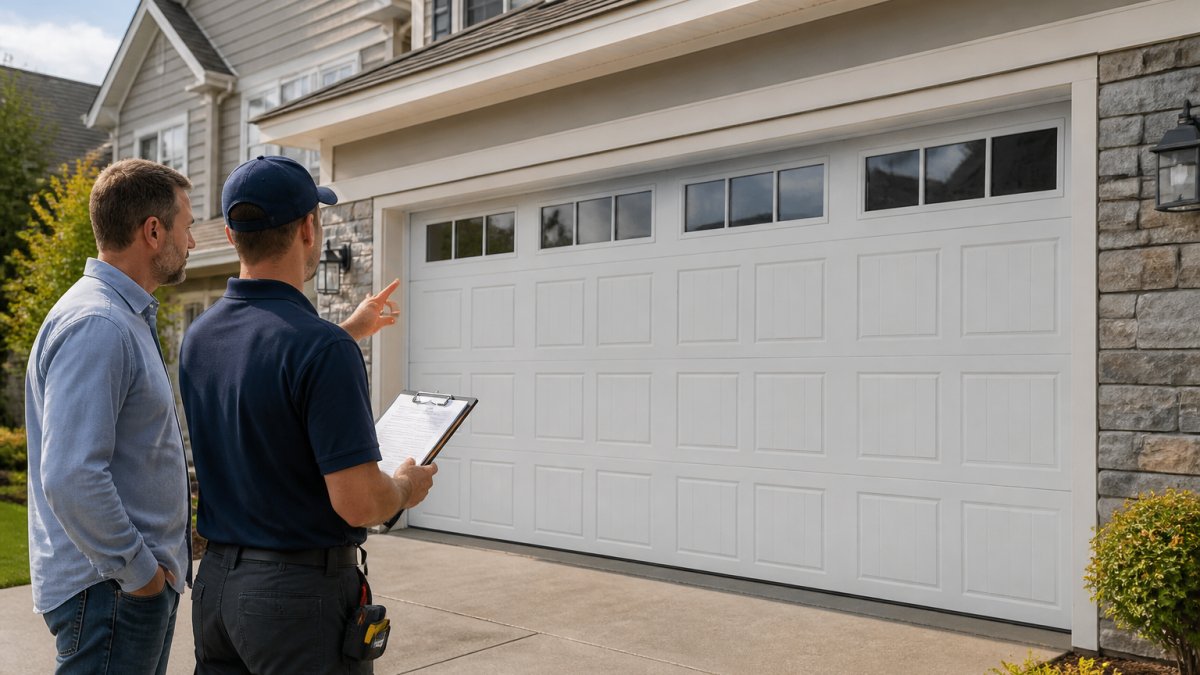
Match the door to the house and the budget before you fall for a style. Traditional raised-panel designs suit most homes. Carriage-house style fits craftsman and colonial exteriors.
| Priority | What to Choose | Why It Matters |
|---|---|---|
| Tight budget | Single-layer steel, basic opener | Lowest upfront cost |
| Energy savings | Insulated three-layer steel | Better R-value, quieter |
| Curb appeal | Carriage-house or custom wood-look | Strong resale impression |
| Storm exposure | High wind-load rated door | Meets local code |
| Low maintenance | Composite or aluminum | Resists moisture and rust |
Pricing depends on size, material, insulation, windows, and installation conditions. For current prices, visit the Performance Building Products, Inc. website or request a quote.
Scheduling a Residential Garage Door Installation
Installation quality affects whether a good door performs. A poorly hung door can wear out springs early and strain the opener.
Ask three questions before signing:
- Who performs the install, and are they insured?
- What does the warranty cover, and does it include labor?
- How soon can you respond if the door fails?
Performance Building Products, Inc. sells, installs, and services residential garage doors and openers for homeowners, contractors, and builders.
A garage door is a long-term purchase, and the difference between a door that lasts and one that fails early comes down to specs, installation, and service.
Frequently Asked Questions
Who makes the best residential garage door?
There is no single best maker for every home. The strongest choice depends on material, insulation needs, and local dealer support. Steel and composite doors suit most climates, while wood and aluminum options fit specific design goals. Look for three-layer construction, a clear R-value, and a written warranty before deciding. A local installer who services the brand matters as much as the label on the door, since installation quality drives how long the door lasts.
What should I compare when choosing among garage door brands?
Compare four things: construction (steel, wood, composite, or aluminum), insulation and R-value, warranty terms including exclusions, and dealer availability for parts and service. Ask whether the door carries a wind-load rating for your area and whether the finish is factory-applied. Pricing varies by size, material, and options, so request a written quote rather than relying on advertised ranges. Repairability and part availability over ten to fifteen years separate durable brands from short-lived ones.
Are some garage door brands better for insulated doors?
Yes. Brands that build three-layer doors with polyurethane or polystyrene cores generally deliver higher R-values than single-layer panels. If your garage sits under a bedroom or you use it as workspace, prioritize a door with a stated R-value and tight weather sealing. Ask for the R-value in writing and confirm the door includes thermal breaks to reduce condensation. Insulation matters most in cold winters and hot summers, where an uninsulated steel door radiates heat or cold into the garage.
Which garage door brands should homeowners avoid?
Be cautious with any brand that will not state its warranty in writing, has no local dealer for parts, or sells only through unsolicited door-to-door pitches. Brands with thin single-layer panels and vague R-values tend to underperform. Check that the manufacturer publishes installation instructions and that a licensed installer stands behind the work. A low price with no service network often costs more over the door’s life through repairs and premature replacement.

Recent Comments