
Last Updated: November 4, 2026
Quick Summary
Your gas fireplace pilot keeps going out most often because of a weak flame signal from a dirty or failing thermocouple or thermopile. Other common causes include a clogged pilot orifice, low gas pressure, a faulty gas valve, and drafts or venting problems. Clean the sensor and orifice first, then call a technician if the problem returns.
- Stop and call a technician if you smell gas or see a yellow or orange pilot flame.
- Hold the control knob for 30 to 60 seconds, then 20 more, before releasing it slowly.
- Cleaning a thermocouple takes about 15 minutes and basic tools; shut off the gas first.
- Never scrape the thermocouple tip with a sharp tool, which can damage the metal.
- If the pilot dies again within a few weeks of cleaning, plan on replacing the thermocouple.
Table of Contents
- Safety First: When to Stop and Call a Technician
- Common Reasons Your Gas Fireplace Pilot Light Keeps Going Out
- Gas Fireplace Pilot Light Goes Out After Releasing Knob
- Gas Fireplace Pilot Goes Out When Main Burner Turns On
- How to Clean a Gas Fireplace Thermocouple
- Gas Fireplace Shuts Off After a Few Minutes
- What to Do Next
- Frequently Asked Questions
Safety First: When to Stop and Call a Technician
A gas fireplace pilot light keeps going out for many reasons, and most are simple. But some point to a real danger.
Gas fireplaces can develop this problem, and the fix is often small. The risk is not.
Stop and call a qualified technician if you notice any of these:
- You smell gas at any point, even faintly
- The pilot flame is yellow or orange instead of blue
- You see soot, scorch marks, or a burnt smell near the pilot assembly
- The glass front is cracked or the vent looks blocked
- You have already replaced the thermocouple and the pilot still dies
Here is why each one matters, and what to do while you wait for service.
Gas odor. Natural gas and propane are odorized so you can detect a leak.
Yellow or orange pilot flame. A healthy pilot flame is mostly blue with a small yellow tip.
Soot, scorch marks, or a burnt smell. These are signs of improper combustion or overheating. Do not run the fireplace.
Cracked glass or a blocked vent. A cracked glass front or an obstructed vent can let combustion gases into the room. Do not operate the fireplace.
A gas fireplace pilot light is a small standing flame that lights the main burner on demand.
Watch out: never ignore a gas odor or a yellow pilot flame to “see if it clears up.” Carbon monoxide is odorless and can build up quickly in a tight room (the CDC).
Common Reasons Your Gas Fireplace Pilot Light Keeps Going Out
The most common cause is a weak flame signal from a dirty or failing thermocouple or thermopile. Other frequent culprits include a clogged pilot orifice, low gas pressure, a faulty gas valve, and drafts or venting problems.
Most guides jump straight to parts. That is backwards. Start with the flame itself, because the flame tells you which part is failing.
Here is how we separate the likely causes:
| Symptom | Likely Cause | First Check |
|---|---|---|
| Pilot won’t stay lit after release | Thermocouple or thermopile | Flame contact on the sensor tip |
| Pilot dies when burner fires | Gas pressure drop | Pilot flow and valve adjustment |
| Weak, lazy blue flame | Clogged pilot orifice | Clean the orifice |
| Pilot dies after minutes | Venting or airflow | Check vent and room drafts |
| Pilot dies in cold months | Drafts, seasonal air | Inspect for cold air paths |
Thermocouple and Thermopile Failure
A thermocouple is a small sensor that generates a tiny voltage when the pilot flame heats it. That voltage holds the gas valve open. If the flame stops heating the tip, the valve closes and the pilot goes out.
A thermopile does the same job but produces more voltage to run the main burner. When either part wears out, the signal weakens and the pilot drops out.
Watch for these signs:
- The pilot lights but dies the moment you release the control knob
- The flame looks fine but the burner won’t ignite
- The pilot tip is blackened or corroded
A common mistake is replacing the thermocouple when the real problem is a dirty tip. Clean it first. Replace only if cleaning fails.
Dirty Pilot Assembly and Clogged Orifice
A dirty pilot assembly is the most overlooked cause. Dust, soot, and spider webs build up around the pilot orifice and block gas flow. The result is a weak flame that cannot heat the sensor.
Signs of a clogged orifice:
- The pilot flame is small and yellow
- The flame lifts off the orifice
- The flame flickers even with no draft
Cleaning is cheap and often solves the problem. We walk through the steps below.
Gas Fireplace Pilot Light Goes Out After Releasing Knob
If the pilot dies the instant you let go of the knob, the sensor is not getting enough flame contact or the thermocouple is failing. The knob holds the valve open manually until the sensor takes over.
Try this sequence:
- Light the pilot and hold the knob for a full 30 to 60 seconds
- Keep holding for another 20 seconds after the flame looks steady
- Release slowly and watch the flame
Still dying? Check that the flame wraps the sensor tip. If it does and the pilot still drops, the thermocouple is likely worn and needs replacing.
Gas Fireplace Pilot Goes Out When Main Burner Turns On
When the pilot goes out as the burner fires, the gas supply cannot handle both at once. This points to low gas pressure, a partly closed valve, or a pilot flow set too low.
Check these in order:
- Confirm the gas line shutoff valve is fully open
- Look for a pressure drop from other gas appliances running at the same time
- Have a technician check the pilot flow adjustment on the gas valve
This is one problem where DIY has limits. Gas pressure testing needs a manometer and training, so contact a qualified technician.
How to Clean a Gas Fireplace Thermocouple
Cleaning a thermocouple takes about 15 minutes and basic tools. Turn off the gas and let the unit cool first.
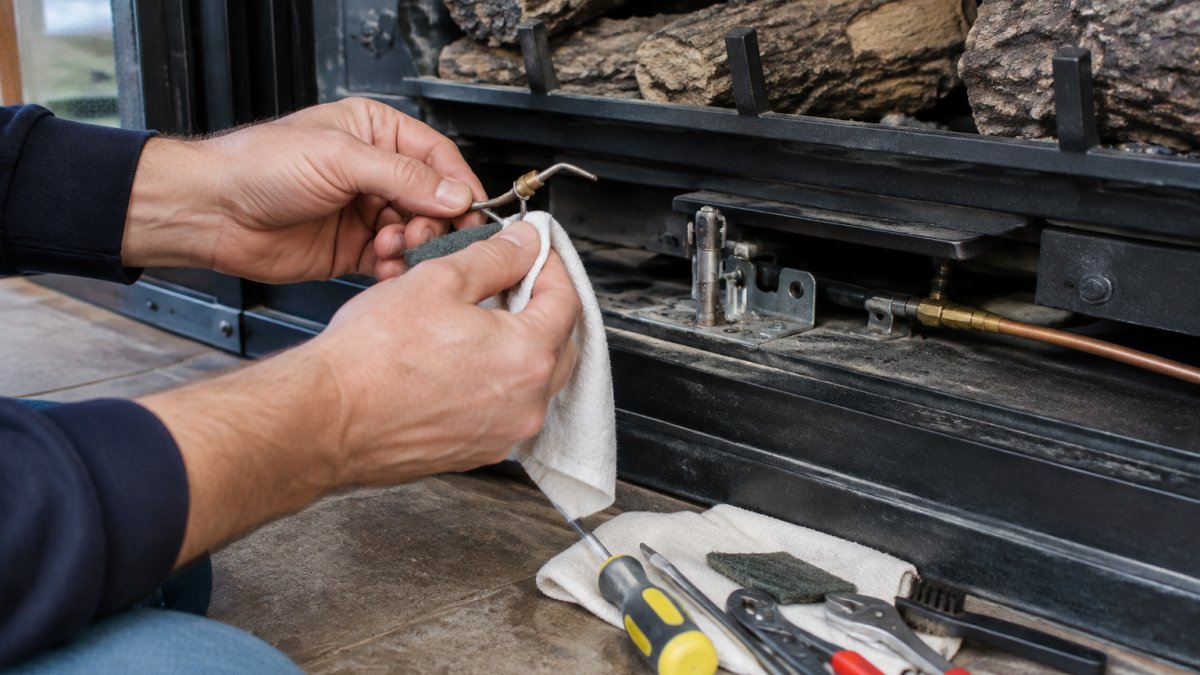
Follow these steps:
- Shut off the gas supply at the shutoff valve and let everything cool completely
- Remove the access panel or glass front per your model’s manual
- Locate the thermocouple tip near the pilot flame, it is the small metal probe sitting in the flame path
- Wipe the tip with a soft cloth
- Gently buff light corrosion with a fine abrasive pad
- Clear dust from the pilot orifice with compressed air
- Reassemble, relight, and hold the knob to test
Watch out: never use a sharp tool to scrape the thermocouple tip. You can damage the metal and make the problem worse.
Model-specific instructions matter here. Check your fireplace’s manual for the exact panel release and pilot location before you start.
How to tell whether cleaning worked: relight the pilot and hold the control knob for 30 to 60 seconds, then release it slowly. If the pilot stays lit and the flame wraps the thermocouple tip, cleaning likely solved the problem.
When to replace instead of clean: replace the thermocouple if the tip is blackened, corroded, or pitted after cleaning, or if the pilot dies on release even with a strong blue flame touching the tip.
A common pattern is that cleaning buys time but does not fix a thermocouple that is already failing. If the pilot goes out again within a few weeks of cleaning, plan on replacement.
Gas Fireplace Shuts Off After a Few Minutes
A fireplace that runs for a few minutes and then shuts off usually has a venting, airflow, or flame-sensor issue. The safety shutoff is doing its job.
Common causes include:
- A blocked or dirty vent
- Cold drafts pulling the flame away from the sensor
- A flame sensor that needs cleaning
- A room that is too airtight for proper airflow
Seasonal changes make this worse. Cold air sinks and pushes drafts across the pilot. If it only happens in winter, airflow is your likely cause.
What to Do Next
A pilot light that keeps going out is a signal, not a mystery. Clean the sensor and orifice first, check the flame contact, then call a pro if the problem returns.
Performance Building Products, Inc. sells, installs, and services gas and electric fireplaces for homeowners and contractors. If your pilot keeps dropping out, have it checked by a qualified technician before the heating season.
Visit the Performance Building Products, Inc. website for current prices or a quote.
Frequently Asked Questions
How do you fix a pilot light that keeps going out?
Start by checking the thermocouple and pilot assembly. A dirty pilot orifice or a thermocouple that isn’t making solid flame contact are the most common culprits. Clean the orifice with a pin and wipe the thermocouple tip with a soft cloth. If the flame is weak or yellow, call a technician to check gas pressure. If the pilot still won’t stay lit after cleaning, the thermocouple or gas valve likely needs replacement, which is a job for a qualified professional.
Is it dangerous if the pilot light goes out in a gas fireplace?
A pilot going out is not automatically dangerous because modern gas fireplaces have a safety shutoff that stops gas flow when the flame is lost. However, if you smell gas, leave the area and call your gas provider immediately. Never keep trying to relight a pilot if you detect gas odor. If the pilot goes out repeatedly, have a technician inspect the thermocouple, gas valve, and venting to rule out a gas leak or carbon monoxide risk.
Why does my gas fireplace pilot light go out when I turn on the main burner?
When the main burner ignites, it draws gas and air, which can starve the pilot if gas pressure is low or the pilot orifice is partially clogged. A weak thermopile signal can also cause the gas valve to drop the pilot when the burner demands more flow. Check for a dirty pilot assembly first, then have a technician test gas pressure and thermopile voltage. This symptom often points to a failing thermopile or a pressure drop in the gas line.
Why won’t a gas fireplace pilot stay lit when I release the knob?
The knob controls a safety valve that stays open only while the thermocouple or thermopile generates enough voltage from the pilot flame. If the flame is weak, not touching the thermocouple, or the thermocouple is worn, the voltage drops and the valve closes when you release the knob. Hold the knob for 30 to 60 seconds after the flame lights, confirm the flame wraps the thermocouple tip, and clean the assembly. If it still won’t hold, replace the thermocouple.

Recent Comments