
Last Updated: November 17, 2026
Quick Summary
An electric fireplace converts nearly all the electricity it uses into heat and can suit supplemental heating in a smaller area, while a gas fireplace can provide greater output for a larger space. For energy efficiency and running cost, compare the useful heat each model delivers, its installation and venting, and your local energy rates.
- Gas fireplaces can produce up to three times the heat of an equivalent electric unit.
- Gas fireplaces are reported to convert 70-90% of their fuel into heat.
- Calculate electric hourly cost by multiplying heater input in kilowatts by your electricity rate per kilowatt-hour.
- Three hours daily for 90 days equals 270 operating hours.
- Zone heating can reduce whole-home energy use when you lower the central thermostat and heat a regularly used room.
Table of Contents
- Gas vs Electric Fireplace for Energy Efficiency: Compare Useful Heat
- Gas vs Electric Fireplace Pros and Cons for Heating Needs
- Gas vs Electric Fireplace Cost to Run: Calculate Your Local Cost
- Ventless Gas vs Electric Fireplace for Energy Efficiency: Choose by Room and Installation
- Frequently Asked Questions
Gas vs Electric Fireplace for Energy Efficiency: Compare Useful Heat
According to City Ventures (2026), electric fireplaces convert nearly 100% of the electricity they use into heat. Gas vs electric fireplace for energy efficiency is not just a conversion-rate question: gas models can deliver more heat to larger rooms. This guide from Performance Building Products explains how to compare useful heat, operating costs, and installation needs before choosing.
An electric fireplace is an appliance that uses electric resistance heat and does not burn fuel inside the room. Gas models use a burner and venting choices that affect heat loss. City Ventures energy-efficiency comparison reports near-total electric heat conversion, while Kozy Heat comparison of fireplace heat output says gas units can produce up to three times the heat of an equivalent electric unit.
| What to compare | Electric fireplace | Gas fireplace |
|---|---|---|
| Heat conversion | Nearly all electricity to heat | 70-90% reported |
| Heat capacity | Often suited to zone heating | Higher output potential |
| Installation | No fuel vent required | Venting depends on model |
Gas vs Electric Fireplace Pros and Cons for Heating Needs
Choose an electric fireplace for convenient supplemental heat in a smaller area, or gas for greater output in a larger space. EcoSmart Fire (2026) reports gas fireplaces can lose 25-40% of heat through venting, so rated efficiency may not reflect heat reaching the room.
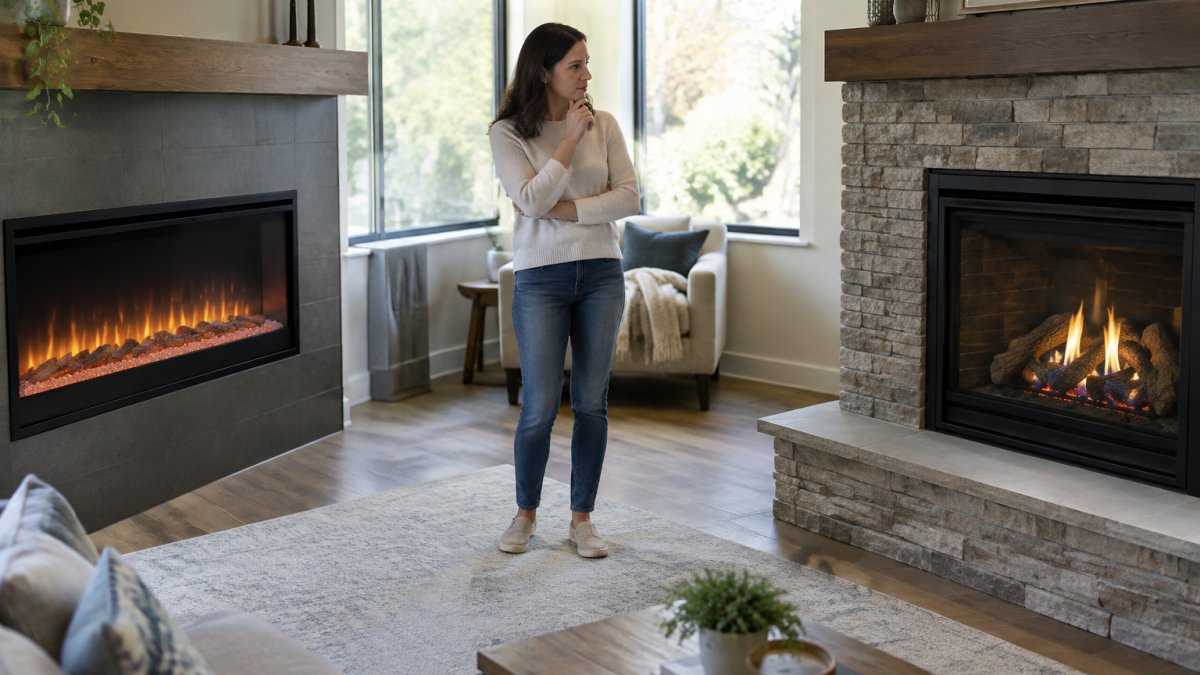
The gas vs electric fireplace pros and cons depend on capacity, installation, and fuel access: electric models avoid indoor combustion, while gas offers a real flame and greater heating capacity. Conversion efficiency alone doesn’t determine bills.
Gas vs Electric Fireplace Cost to Run: Calculate Your Local Cost
The gas vs electric fireplace cost to run depends on energy use, utility rates, and useful heat. Compare the cost of delivering similar heat over the same period, not efficiency labels or maximum BTU ratings.
Calculate cost per hour from the appliance inputs
For an electric fireplace, use the heater’s input in kilowatts and your electricity price in dollars per kilowatt-hour:
Electric cost per hour = heater input (kW) × electricity rate ($/kWh)
For a gas fireplace, use the burner’s fuel input in therms per hour and your gas price in dollars per therm:
Gas cost per hour = gas input (therms/hour) × gas rate ($/therm)
If gas input is listed in BTU per hour, divide by 100,000 to get therms per hour; one therm equals 100,000 BTU. Use your bill’s rate, including delivery charges where possible. Treat the result as an estimate because average and marginal prices may differ.
Multiply hourly cost by operating hours: three hours daily for 90 days equals 270 hours. Use the same schedule for both appliances, adjusting for thermostat cycling or heating needs.
Compare useful heat, not just rated efficiency
Input ratings show energy consumed; output ratings or efficiency indicate how much becomes room heat. Check the exact model and vent configuration; never compare gas fuel input directly with electric heat output.
Estimate delivered heat as energy input × applicable efficiency, then divide hourly cost by delivered heat to compare cost per unit of useful heat. Venting, cycling, thermostat settings, and heat loss make this an estimate.
A higher BTU rating means greater potential output, not better efficiency or lower cost. Gas may suit a larger area; a smaller electric unit may cost less in a limited zone. Match the unit to the room.
Watch out: Gas fireplace efficiency varies by vent type, model, and operating conditions; don’t apply a generic percentage.
Zone heating can reduce whole-home energy use when occupants lower the central thermostat and heat only a regularly used room. If the central system keeps heating the same areas as before, a fireplace may add energy use rather than replace it.
For electricity’s upstream energy use and emissions, the result also depends on how the power is generated. The National Center for Biotechnology Information hosts research on electricity generation and heating efficiency: National Center for Biotechnology Information study on electricity generation and heating efficiency.
Ventless Gas vs Electric Fireplace for Energy Efficiency: Choose by Room and Installation
Ventless gas, direct-vent gas, and electric fireplaces differ in heat source, exhaust, and room requirements. Venting, poor insulation, or oversizing can make labeled efficiency differ from useful room heat.
Understand the installation differences
- Ventless gas: Burns gas without exhausting combustion products through an outdoor flue. Follow manufacturer instructions and local requirements; room size and ventilation matter.
- Direct-vent gas: Uses a sealed system that commonly draws combustion air from outdoors and exhausts through a dedicated vent. Vent routing affects placement and indoor heat retention.
- Electric: Uses resistance heat without burning fuel. It generally needs no gas line or combustion vent, but requires suitable electrical service and specified clearances.
Venting can carry heat outdoors, while sealed direct-vent designs separate combustion from room air. Neither ventless nor direct-vent models are automatically more efficient or cheaper. Compare the exact model’s input, output, efficiency, and suitability for the room.
Match the unit to the room and the way you heat
Performance depends on ceiling height, insulation, drafts, doorways, and layout, not room size alone. A smaller appliance may heat a closed, well-insulated room, while heat can disperse in a drafty or open-plan space.
Thermostats stop heating at the set temperature; manual operation may run longer than needed. For zone heating, lower the central thermostat when appropriate to avoid increasing total heating use.
Include indoor air and installation safety in the decision
Improperly installed, maintained, or operated gas appliances can produce combustion pollutants. Follow the manual, use a qualified professional for gas work, and maintain carbon-monoxide alarms as directed. Observe ventless models’ room and operating restrictions because combustion products aren’t exhausted through a flue.
Electric fireplaces avoid combustion but still need safe placement, suitable electrical service, and specified clearances. Keep combustibles away, avoid damaged cords or outlets, and check the manual before using a circuit.
Never block a gas fireplace’s required air openings or vent, or substitute an open window for the manufacturer’s instructions.
Before choosing, compare the installation requirements for the exact model, including vent route, fuel connection, electrical supply, clearances, and service access. For electric models, browse electric fireplace options or review the ERT3036 electric fireplace. For gas models and installation, see gas fireplace models and installation; our gas and electric fireplace comparison covers broader differences.
If heat capacity, fuel costs, and installation requirements make the choice unclear, Performance Building Products can help you review fireplace options and professional installation. Get started with Performance Building Products to choose a fireplace suited to your home and heating needs.
Frequently Asked Questions
Which is more energy efficient, a gas or electric fireplace?
Electric fireplaces convert nearly 100% of the electricity they use into heat at the unit, while gas fireplaces convert about 70-90% and lose some heat through venting. That does not mean electric always costs less or heats a room better. Gas units can produce up to three times the heat of an equivalent electric unit. Compare delivered heat, local electricity and gas rates, and the room’s heating needs.
Is it cheaper to run a gas or electric fireplace?
There is no universal lower-cost option: the result depends on local electricity rates, natural gas prices, the unit’s energy consumption, and how long it runs. For a gas vs electric fireplace cost to run comparison, multiply each fuel’s local rate by the appliance’s hourly consumption, then compare the cost for the same operating time. Use manufacturer specifications for consumption and avoid comparing units with very different heat output.
How do ventless gas and electric fireplaces compare for energy efficiency?
A ventless gas fireplace avoids the heat loss associated with venting, but its efficiency and suitability depend on the specific model and applicable installation requirements. An electric fireplace converts nearly all the electricity it uses into heat at the unit and does not burn fuel indoors. Compare the manufacturer’s efficiency and heating-capacity information, installation requirements, and local building rules before choosing.

Recent Comments